
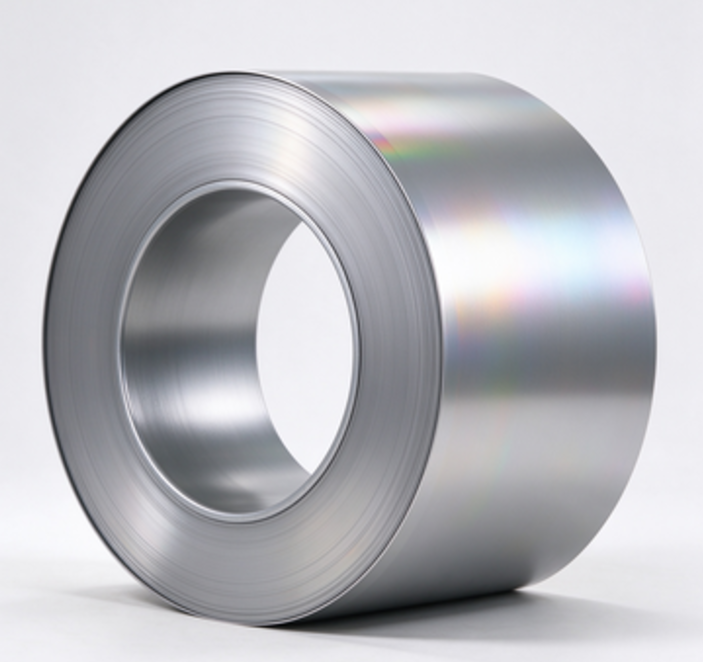
I've spent the better part of two decades in the coated steel industry, and I still see buyers make the same mistake. They request quotes from five PPGI steel coil suppliers, pick the one with the lowest price per ton, and then spend the next six months dealing with coating delamination, color inconsistency between batches, and zinc layers that measure 20% below spec.
The pre-painted galvanized iron market hit USD 1.81 billion in 2025 and is projected to reach USD 3.26 billion by 2034, growing at a 9.0% CAGR. That's not a niche material anymore. It's the default choice for roofing, wall cladding, appliance casings, and industrial panels across the world. But the same growth that makes PPGI attractive also attracts suppliers who cut corners on coating thickness, skip proper surface pre-treatment, and ship coils that look fine on the invoice and fail in the field.
This guide is about separating the real manufacturers from the traders, and understanding what you're actually paying for when you buy PPGI.
What Is PPGI Steel, Exactly?
PPGI stands for Pre-Painted Galvanized Iron. The name is a bit of an industry anachronism. The base material isn't iron at all. It's cold-rolled steel that has been through a continuous coil coating line.
Here's how the layers stack up, from the core outward. The base steel is typically DX51D or DX52D grade, with thickness ranging from 0.12 mm to 1.5 mm. That steel gets hot-dip galvanized, meaning it's submerged in molten zinc, which bonds metallurgically to the surface. The zinc layer is measured in grams per square meter, ranging from Z60 to Z275, and it's the primary corrosion barrier.
On top of the zinc, there's a chemical pre-treatment layer—usually chromate or phosphate—that micro-etches the surface so the paint can grip. Then comes a primer layer, typically 5 to 8 microns, followed by the top coat at 15 to 25 microns. The back side gets a thinner coat, 5 to 8 microns, to prevent corrosion during storage.
Every layer matters. A thin primer, a hastily pre-treated surface, or an underbaked topcoat creates a failure point. And those failure points don't show up until the coil is cut, formed, installed, and exposed to the elements.
The Standards That Actually Govern Quality
When you're evaluating a PPGI steel coil supplier, the first question should be about standards compliance. If they can't answer with specificity, end the conversation.
The main standards you'll encounter are JIS G3312 for Japanese-market material, EN 10142 and EN 10137 for European specifications, and ASTM A653 for North American buyers. The grade designations matter too. SGCC is the Japanese standard for hot-dip galvanized steel. DX51D is the European equivalent.
But compliance isn't just about the grade name on the certificate. It's about the coating mass, the paint adhesion, the bend test results, and the pencil hardness. A supplier who claims "SGCC" but can't show you a Mill Test Certificate with actual measured values for zinc coating weight and paint thickness is a supplier who will ship you material that looks right and performs wrong.
How to Evaluate a PPGI Steel Coil Supplier
Here's the framework I use when qualifying a new supplier. This isn't theoretical. These are the checkpoints that separate manufacturers from middlemen.
Evaluation Criteria | What to Verify | Red Flag |
Standards compliance | JIS G3312, EN 10142, or ASTM A653 with documented test results | Vague answers about which standards they follow |
Mill Test Certificate | Per-heat MTC with actual zinc weight and paint thickness measurements | "Typical values" instead of measured data |
Coating types offered | PE, SMP, HDP, PVDF available | Only one coating type, no options |
Production capacity | Multiple coating lines, in-house galvanizing or direct mill relationships | Single line, outsourced coating |
Certifications | ISO 9001, RoHS, SGS or CE | No verifiable certifications |
Lead time | 15-25 days for standard orders | Quoted lead times under 10 days for custom colors |
After-sales support | Technical guidance, warranty, transparent replacement policy | No post-shipment contact |
The lead time benchmark of 15 to 25 days comes directly from industry standard practice for PPGI coil production. If a supplier quotes 7 days for a custom RAL color, they're either sitting on old stock or they're lying.
The Coating Types and What They're Actually Good For
Not all PPGI coatings are the same. The coating chemistry determines how the coil performs in its final application, and choosing the wrong one is an expensive mistake.
Polyester (PE) is the workhorse. It's the most common coating for general construction, roofing, and appliance panels. It offers good color retention and formability at a reasonable cost. For interior applications and moderate outdoor exposure, PE is the right choice.
Silicon-Modified Polyester (SMP) is a step up. It has better UV resistance and chalk resistance than standard PE. For exterior roofing in high-sunlight environments, SMP is worth the premium.
High-Durability Polyester (HDP) is engineered for demanding outdoor exposure. It resists chalking, fading, and gloss loss better than SMP. For architectural cladding where appearance matters for decades, HDP is the standard.
PVDF (Polyvinylidene Fluoride) is the top tier. It's a fluoropolymer coating with exceptional weather resistance—color retention for 20 years or more in harsh environments. PVDF is what you specify for high-profile architectural projects, coastal installations, and any application where re-coating is impossible.
A supplier who only offers PE is a supplier who can't serve the full range of PPGI applications. Ask what coating systems they run. The answer tells you how serious they are.
A Real Case Study: When the Coating Failed
A construction company I worked with sourced PPGI coils for a warehouse roofing project in Southeast Asia. The supplier quoted a competitive price for 0.5 mm thickness with Z100 zinc coating and PE paint.
The coils arrived on time. The MTC looked correct. The project was completed on schedule. Six months later, the roof started showing rust streaks at the cut edges and fastener points. Within a year, the coating was blistering in patches.
The investigation revealed the problem. The zinc coating was actually Z60, not Z100. The MTC had been falsified. The cut edges—where the steel was exposed—had insufficient zinc to provide sacrificial protection. In a humid tropical environment, the corrosion spread rapidly under the paint film.
The cost of replacing that roof was four times what the company had saved by choosing the cheaper supplier. And the reputational damage with their client was worse.
The lesson is simple. Verify the zinc coating weight independently. Don't trust the certificate alone. A magnetic thickness gauge costs a few hundred dollars and can save you a hundred times that in avoided rework.
Price, Logistics, and the Real Cost of Cheap Coils
PPGI steel coil pricing varies significantly based on specifications, order volume, and market conditions. As of early 2026, standard PPGI coil at 0.5 mm thickness with Z100 zinc and PE paint was priced at approximately USD 750 to USD 950 per ton FOB China, depending on specifications and order volume. Prices fluctuate with zinc and steel substrate costs, so timing your orders around market trends matters.
But price per ton isn't the whole story. Here's what buyers often overlook.
Freight cost depends on coil weight, port proximity, and shipping route. Suppliers in Shandong province, for example, operate within easy reach of Qingdao Port, one of Asia's busiest cargo hubs. That proximity reduces inland freight and transit delays compared to suppliers located further from major ports.
Tariffs and trade measures add another layer. Egypt implemented safeguard measures on PPGI imports in April 2026, with duties starting at 13.7% of CIF value and a minimum duty of USD 122 per ton. Buyers in affected markets need to factor these costs into their landed price calculations. A supplier who understands the trade landscape in your destination market is worth more than one who only knows FOB pricing.
What to Look For in a Manufacturing Partner
A real PPGI manufacturer has certain characteristics that a trading company simply cannot replicate.
They have their own coating lines. Not outsourced, not contracted out. Their own. This matters because coating line control—line speed, oven temperature, curing time—directly determines paint adhesion and durability. A manufacturer who controls their own line can guarantee consistency. A trader cannot.
They have multiple coating lines. This allows them to produce different coating types and colors simultaneously, which means stable coating thickness and consistent output across large orders. A supplier with a single line is limited in capacity and flexibility.
They test every batch. Zinc coating weight, paint thickness, adhesion, pencil hardness, bend test, impact test. These are standard quality control checks for serious PPGI producers. If a supplier only tests occasionally or relies on the mill's certificate without their own verification, their quality is only as good as their last batch.
They offer technical support after the sale. A good supplier helps you troubleshoot forming issues, recommends the right coating for your specific environment, and stands behind their material if something goes wrong. A bad supplier disappears after the invoice is paid.
Frequently Asked Questions
How do I verify the zinc coating weight on incoming PPGI coils?
Use a magnetic coating thickness gauge. It measures the zinc layer in grams per square meter or microns. Test at multiple points along the coil width and length. Compare the average to the MTC. If the difference exceeds 10%, you have a problem.
What's the difference between PPGI and PPGL?
PPGI uses a galvanized (zinc) substrate. PPGL uses a Galvalume substrate—an aluminum-zinc alloy coating that offers better heat resistance and longer service life in some environments. PPGL is more expensive, but it outperforms PPGI in high-temperature or highly corrosive applications.
Can I get custom RAL colors?
Yes. Most manufacturers can produce any RAL color. Custom colors typically require a minimum order quantity of 5 to 25 tons and add 3 to 7 days to the lead time. The larger the order, the more cost-effective custom colors become.
How should PPGI coils be stored before use?
Keep them in a dry, covered area. Avoid direct contact with the ground. Moisture between coils can cause white rust (zinc oxide) to form on the surface, which compromises paint adhesion. If storage exceeds three months, ensure proper ventilation between coils.
What's the typical MOQ for a PPGI order?
Most suppliers set a minimum order quantity of 5 tons for standard specifications. Custom colors or specialized coating types may require 10 to 25 tons. For trial orders, some suppliers will accommodate smaller quantities at a premium.
The Bottom Line
Sourcing PPGI steel coils isn't about finding the cheapest price per ton. It's about finding a supplier who can deliver certified material with the right zinc coating weight, the right paint system, and the right surface treatment for your specific application.
Check their standards compliance. Verify their Mill Test Certificates. Ask about their coating line capacity and quality control process. And always, always run a trial order before committing to a large contract.
The coil itself is a commodity. The supplier is not. Choose accordingly.